The best gift that you can give for a 6 months babies usually comes down to something that a baby can actually interact with every day instead of something that just looks cute on a shelf. The real answer is simple: choose gifts that support early movement, safe sensory play, and make life easier for the caregiver using the Motor Signal, Sensory Signal, and Caregiver Signal framework.
At 6 months, babies are rolling, grabbing, mouthing everything, and starting to sit with support. So the best gifts are not decorative. They are tools for early development that survive daily use.
A Simple 3-Point Check Before You Buy
Before picking anything, run it through this filter:
Motor Signal – Does it encourage reaching, grasping, or hand switching?
Sensory Signal – Does it safely support texture, sound, or visual contrast exploration?
Caregiver Signal – Does it reduce friction like cleanup, safety worries, or routine stress?
“If a toy doesn’t get reused, it’s not a gift. It’s clutter.”
“At 6 months, babies don’t need more things. They need better interaction.”
1. BPA-Free Silicone Teething Toys (High Oral Motor Value)
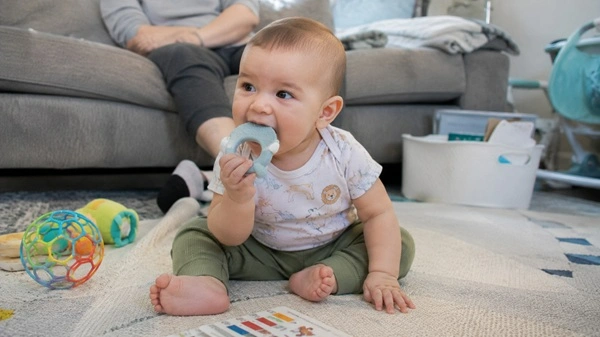
Teething is not a side phase at this stage. It’s constant.
Go for BPA-free silicone teething materials with multiple textures. Soft ridges, loops, and chew zones help with oral motor development (teething phase support) while being safe for constant mouthing.
What matters here:
- Easy to grip with small hands
- Freezer-safe options for gum relief
- One-piece designs (less hygiene stress)
Parents care less about design and more about “can I rinse this fast?”
2. High-Contrast Sensory Cloth Books
These are surprisingly powerful for sensory integration exposure (safe tactile variation).
At 6 months, vision is still developing contrast sensitivity. Black-and-white or bold primary color books work better than pastel-heavy designs.
Look for:
- Crinkly pages for sound feedback
- Soft fabric edges for chewing
- Simple shapes (faces, circles, blocks)
“Babies stare longer at contrast than color complexity.”
3. Open-Ended Rattles (Montessori-Inspired)
Forget noisy plastic toys that do everything for the baby. You want Montessori-inspired open-ended play objects.
Good rattles:
- Lightweight enough for one-hand grip
- Slight resistance for shaking feedback
- No overwhelming lights or sounds
This supports fine motor pincer grasp development as babies start shifting from palm grip to finger control.
4. Activity Floor Mirror (Tummy Time Upgrade)
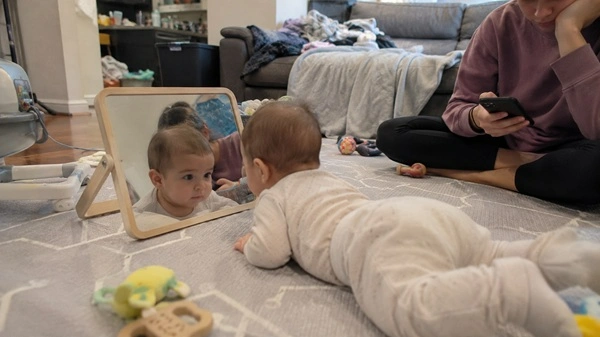
This is one of those underrated gifts that parents quietly appreciate.
Babies at this stage are building developmental milestones at 6 months (rolling, sitting support). A floor mirror helps with:
- Head lifting during tummy time
- Self-recognition curiosity
- Longer engagement periods
It also keeps babies occupied just long enough for a parent to drink coffee while it’s still warm. Rare win.
5. Soft Stackable Rings or Cups
Simple stacking toys are not just toys. They are early coordination tools.
They support:
- Hand-to-hand transfer practice
- Cause-effect learning (drop, stack, repeat)
- Grip strength development
Look for soft silicone or fabric versions instead of rigid plastic. Less noise, more safety.
6. Sensory Play Mat With Defined Zones
A good play mat does more than cushion the floor.
It creates structured space for movement exploration tied to Sensory integration exposure (safe tactile variation).
Best versions include:
- Textured zones (smooth, bumpy, crinkly)
- High-contrast patterns
- Washable materials (non-negotiable for real life)
“A good play mat quietly becomes the baby’s first training ground.”
7. Soft Crinkle Toys With Simple Faces
These are small, but they punch above their weight.
They support:
- Early visual recognition
- Sound-response curiosity
- Grip and squeeze practice
Choose lightweight designs that are easy to wash and meet ASTM F963 toy safety standard compliance. That detail matters more than people think.

What Most People Get Wrong
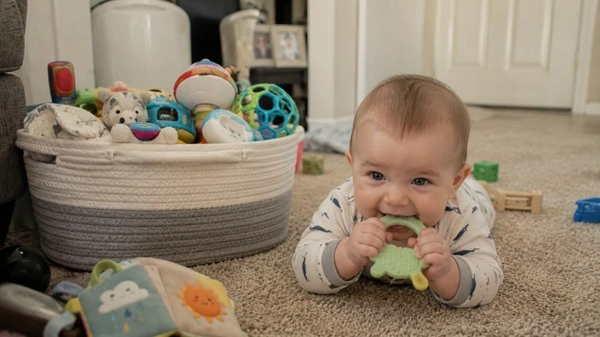
A lot of baby gifts fail because they ignore safety and repetition.
Anything without:
- Simple cleaning routine
- Safe chewing design
- Repeated engagement value
…ends up in the “unused toy basket” within two weeks.
“The best baby gift is the one that disappears into daily routine.”
“If it doesn’t survive teething hands, it won’t survive real use.”
Pick One That Matches Daily Life, Not Just the Gift Table

Before buying, picture it at 7 am. Half-awake parent. Baby already rolling, grabbing, chewing. That’s the real test, not how it looks when wrapped.
If the item needs setup, supervision, or slow cleaning, it becomes extra work fast. But if it can be used with one hand, dropped without breaking, and rinsed in seconds, it actually fits into the chaos instead of interrupting it.
“If it doesn’t work at 7am, it won’t work at all.”
Quick check: one-hand use, easy clean, safe to chew. If it passes, it stays. If not, it’s just clutter in disguise.
Conclusion
The best gift for a 6-month-old isn’t about variety or price. It’s about how often it gets used in real, messy, everyday parenting life. The strongest choices support movement, safe sensory exploration, and reduce stress for caregivers at the same time.
Once you start filtering gifts through Motor, Sensory, and Caregiver signals, most generic options fall away quickly. What’s left is a smaller set of items that actually earn their place in the room instead of taking up space.
That’s usually the difference between a forgotten toy and something that quietly becomes part of a baby’s daily development.
“If it doesn’t support movement, safe chewing, or daily repetition, skip it.”
Sources:
https://www.cdc.gov/ncbddd/actearly/milestones
https://www.aap.org
https://www.nhs.uk/conditions/baby/babys-development