The best gifts that you can give to a father who likes to DIY are the ones he actually ends up using in real projects. Not the “nice idea” tools that sit in a corner of the garage.
Most of the time, it’s not about buying more gear. It’s about removing the little annoyances that slow him down. Things like wasting time looking for tools, fixing small mistakes, or dealing with a messy workspace.
That’s where this simple idea helps. Think in four problem areas: setup, getting the job done, fixing mistakes, and keeping things organized.
Once you look at it that way, gift ideas stop being random. They start matching real problems he runs into every weekend.
Below are 11 practical picks based on that approach. No filler. Just things that make DIY work smoother and less frustrating.

The Friction-to-Finish Framework (How to Pick the Right Gift)
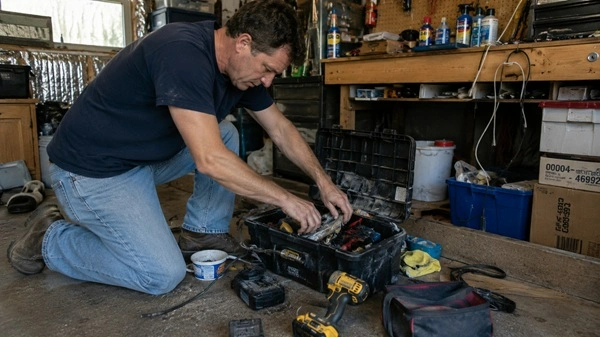
Most DIY frustration doesn’t come from lack of tools. It comes from wasted motion.
Here’s how it breaks down in real workshops:
- Setup Friction – hunting for bits, charging dead batteries, clearing space
- Execution Friction – weak tools, low precision, slow cutting or drilling
- Correction Friction – mistakes that force sanding, re-cutting, re-aligning
- Storage Friction – cluttered screws, missing drivers, tangled cords
“Good DIY tools don’t feel exciting. They feel like time coming back.”
“The best gift is the one that disappears into the workflow.”
1. Brushless Drill Driver Kit (Execution Friction Killer)
A solid drill with proper torque rating (Nm / in-lbs) changes everything. Cheap drills stall mid-task. Good ones don’t.
Look for:
- Brushless motor efficiency for longer runtime
- Strong lithium-ion battery platform compatibility (same batteries across tools)
- Clear impact driver vs drill driver distinction so it actually fits the job
This is the “core tool” upgrade most DIY dads quietly need but rarely replace themselves.
2. Impact Driver (For Faster Fastening)
If he builds furniture or works with wood screws, this is the speed tool.
It uses rotational impact instead of constant force. That reduces wrist strain and strips fewer screws.
Watch for:
- High torque output consistency
- Battery ecosystem matching existing tools
“An impact driver turns stubborn screws into background noise.”
3. T-Track Workbench Kit (Precision Setup Upgrade)
A T-track system (woodworking jigs and workbenches) is one of those upgrades that changes accuracy immediately.
It allows:
- Repeatable cuts
- Stable clamping points
- Cleaner alignment
This is especially useful for furniture builders who hate “almost straight” results.

4. Premium Bit Set (Wear-Resistant Upgrade)
Cheap bits fail fast. They round off. They slip. They ruin screws.
Look for:
- High bit set wear rating / steel hardness (HRC scale)
- Magnetic tips for grip stability
- Deep socket variety for furniture builds
“Bad bits waste more time than bad drills.”
5. Oscillating Multi-Tool (Precision Repair Workhorse)
A proper oscillating tool handles trimming, sanding, and tight-space cuts.
Key spec to check:
- Oscillating multi-tool blade oscillation rate (OPM)
This tool shows up in awkward jobs:
- Door frame trimming
- Flush cuts
- Small repair work in tight corners
It’s not glamorous. It’s constantly useful.
6. Dust Extraction Upgrade Kit (Cleaner Workflow)
Dust is the silent workshop problem.
A good system improves:
- Visibility
- Air quality
- Tool lifespan
Look for:
- Proper dust extraction efficiency (CFM rating)
- Compatibility with saws and sanders
Less dust means fewer mistakes. Simple as that.
7. Digital Angle Finder or Calibrated Mitre Gauge
Cuts that look “close enough” are usually not.
A calibrated tool helps with:
- Mitre saw angle calibration accuracy
- Repeated angle cuts for frames and trim
This is especially useful for furniture corners that need to actually meet cleanly.
8. Heavy-Duty Clamp Set (Glue-Up Stability Fix)
Clamps decide whether glue-ups succeed or become scrap.
Pay attention to:
- Clamping force distribution
- Jaw stability under pressure
Cheap clamps flex. Good ones hold alignment like a vice.
9. Modular Screw and Bit Organizer (Storage Friction Fix)
Nothing slows a project like missing screws.
A modular organizer reduces:
- Lost fasteners
- Duplicate purchases
- Mid-project frustration
This is a quiet but high-impact upgrade.
10. Portable Tool Battery Charging Station (Setup Friction Fix)
Most DIY setups fail here. Batteries are scattered. Chargers are unplugged.
A dedicated station:
- Keeps lithium-ion packs ready
- Reduces downtime between tasks
- Centralizes charging workflow
Small change. Big time saver.
11. Compact Work Light with Adjustable Mount
Bad lighting creates bad work. Simple.
Look for:
- Adjustable brightness levels
- Stable clamp or tripod mount
- Wide beam coverage for work surfaces
“You can’t fix what you can’t clearly see.”
Choose Based on What Actually Slows Him Down
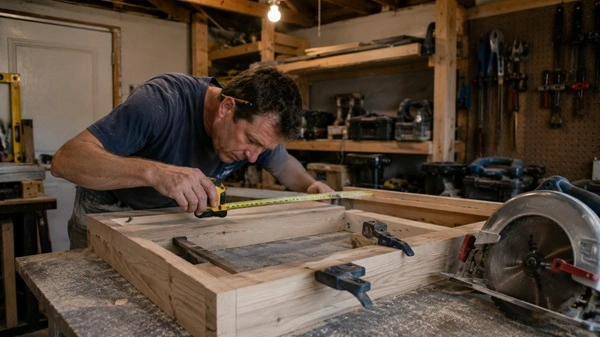
Don’t overthink the gift. Most people do. Then they default to another tool he’ll barely use.
Start with one simple question: what keeps slowing his projects down?
- Is it setup chaos.
- Missing tools mid-job.
- Redoing cuts because something wasn’t precise.
- Or a workspace that turns into clutter halfway through.
Once you see that pattern, the choice gets obvious. You’re not buying “a tool.” You’re removing a repeat frustration he already fights every weekend.
“The best DIY gift fixes a problem he stopped complaining about years ago.”
“If it doesn’t save time or reduce mistakes, it becomes shelf weight.”
Now the shortcut:
- If he wastes time finding or organizing things → modular storage system
- If he struggles mid-project with power or precision → brushless drill kit
- If his work gets messy or inconsistent → alignment or measurement upgrades
- If everything feels scattered → charging + tool station setup
If you want the lowest-risk pick, go with a brushless drill kit or a proper modular storage system.
Not because they’re trendy. Because they fix problems every DIY setup has, even the good ones.
Conclusion
DIY gifting works best when it solves real workshop friction instead of adding more clutter. Once you map Setup, Execution, Correction, and Storage issues, the “right” gift becomes easier to see. It stops being about tools and starts being about flow.
Most DIY spaces don’t need more gear. They need fewer interruptions between idea and finished project. That shift is what separates a forgotten gift from something used every weekend.
If you’re unsure, choose anything that saves time mid-project. Not before or after. That’s usually where the real frustration lives.